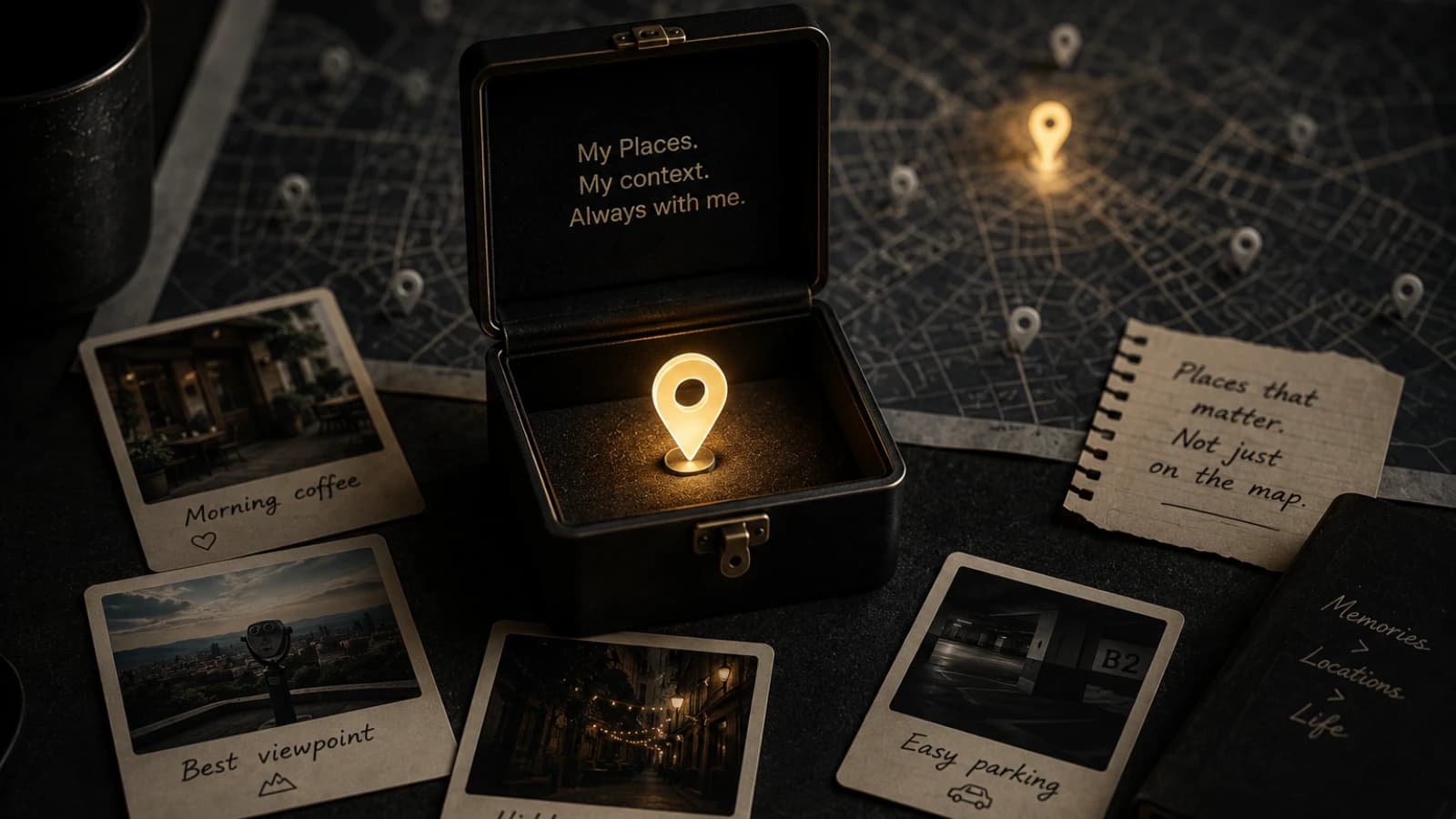
Saving locations should be simple. It’s not.
At some point I realized I had dozens of places I wanted to keep: fishing spots, viewpoints, random places I discovered while traveling. Not restaurants. Not businesses. Just points that mattered to me.
So naturally, I tried using Google Maps.
It didn’t work.
What I expected
I thought I’d be able to:
- Save a spot instantly (like a bookmark)
- Organize places in a clean way
- Keep them private
- Share a few of them with specific people
Sounds basic.
What actually happens in Google Maps
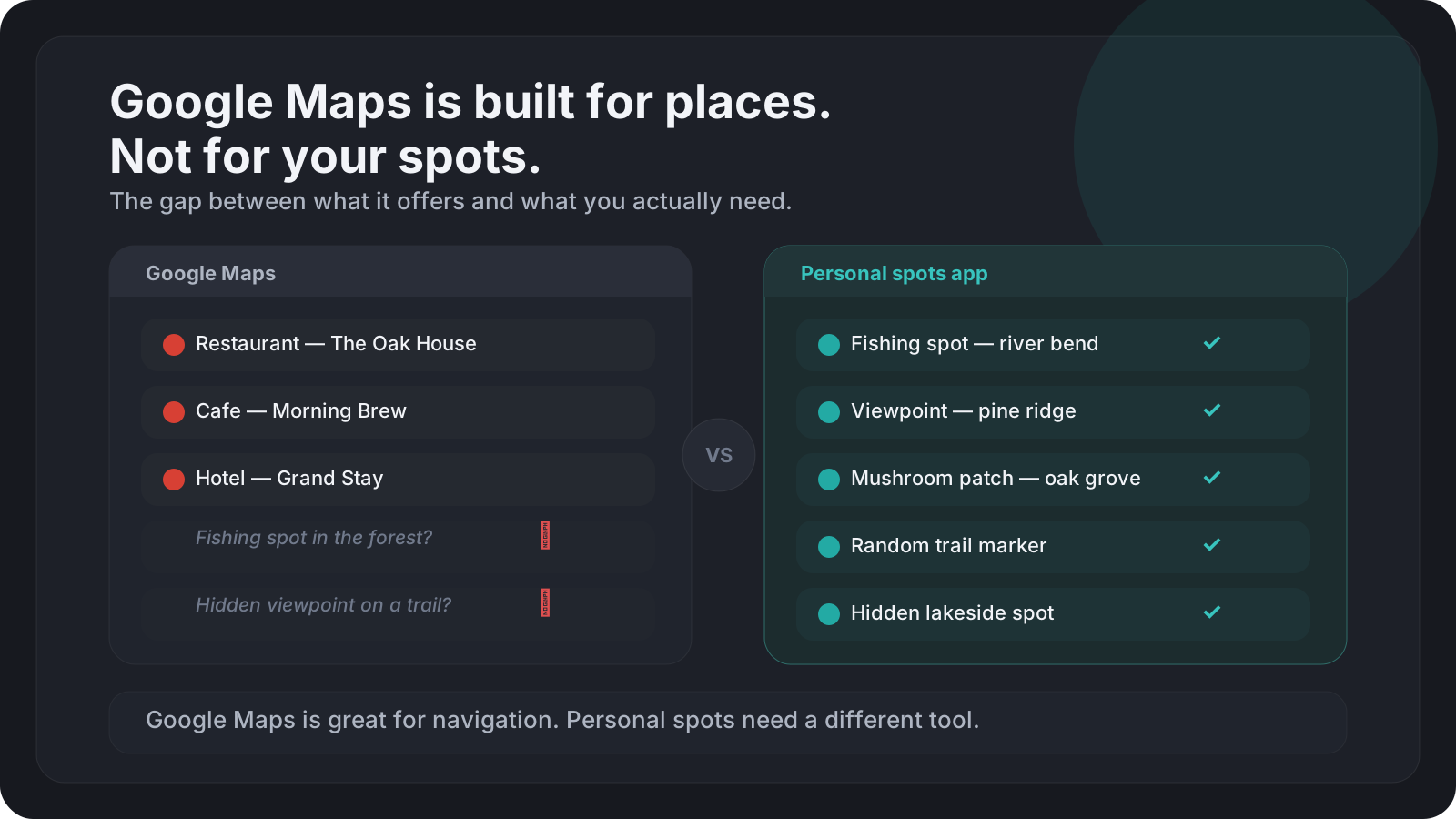
Google Maps is built around places, not personal points.
That difference matters more than it seems.
1. It’s optimized for businesses, not your own spots
When you save something in Google Maps, you're usually saving:
- a restaurant
- a cafe
- a public place
But what if it’s:
- a fishing location in the middle of nowhere
- a mushroom spot in the forest
- a random roadside view
You end up dropping a pin, but it feels like a hack — not a first-class feature.
Lists don’t scale
Google Maps gives you “Saved” lists.
At first it feels fine. Then:
- Everything becomes a long flat list
- No real structure
- No fast way to navigate your own spots
- No context (why did I save this?)
After ~20–30 places it starts breaking down.
Privacy is basically all or nothing
This is the biggest problem.
You can either:
- keep everything private
- or share a full list
But what if you want:
- share just one fishing spot
- with one person
- without exposing everything else?
You can’t.
The usual workaround:
- copy coordinates
- send them manually
- lose all context
Sharing is not built for real life
Real use cases look like this:
- “I’ll send you that exact spot where I caught fish last week”
- “Don’t share this with others”
- “This place only works in spring”
Google Maps sharing doesn’t support that kind of nuance.
It’s generic.
What I actually needed
After using it for a while, I realized I wanted something very different:
- Save a location in one tap
- Work with any point, not just known places
- Be private by default
- Share selectively
- Keep context (notes, meaning, memory)
Basically — something built for personal discovery, not navigation.
What I built instead
That’s how I ended up building :contentReference[oaicite:0]{index=0}.
Not a maps app. Not a navigation tool.
Just a simple way to:
- save places that matter
- keep them private
- share only what you want
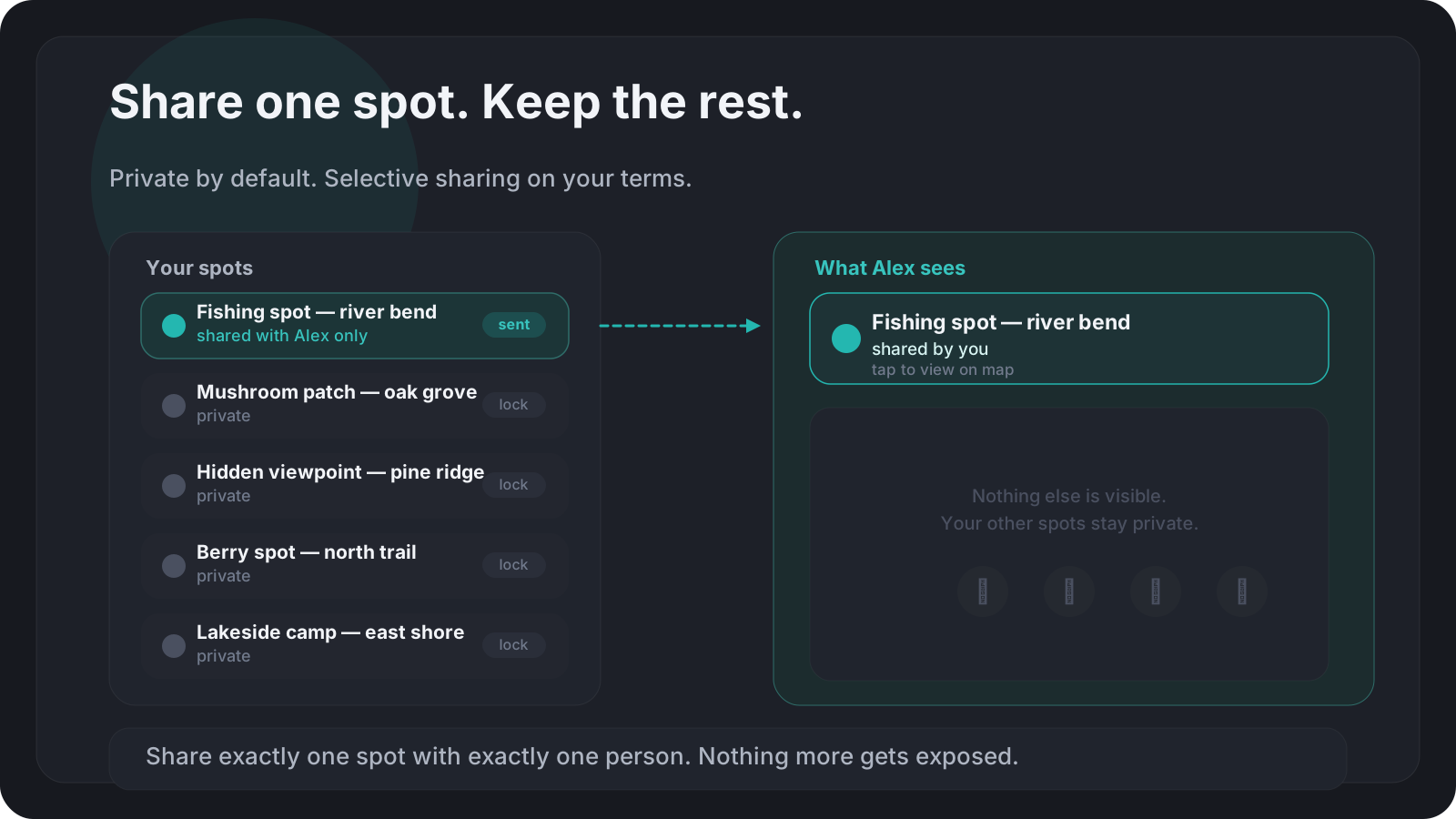
One small but important detail: everything is yours by default.
No accidental sharing. No exposure.
The shift that changed everything
The key realization was this:
Maps apps are built for finding places. I needed something for keeping them.
That’s a completely different problem.
And once you see it that way, a lot of UX decisions suddenly make sense.
Final thoughts
Google Maps is incredibly good at what it does.
But saving personal locations is not its core use case.
If you only save restaurants — it works.
If you care about your own places — it starts falling apart.
That gap is bigger than it looks.
And it’s probably why I ended up building my own tool.
Discussion
Responses
No approved responses yet.